



Boğaziçi CT3
Hizmetler
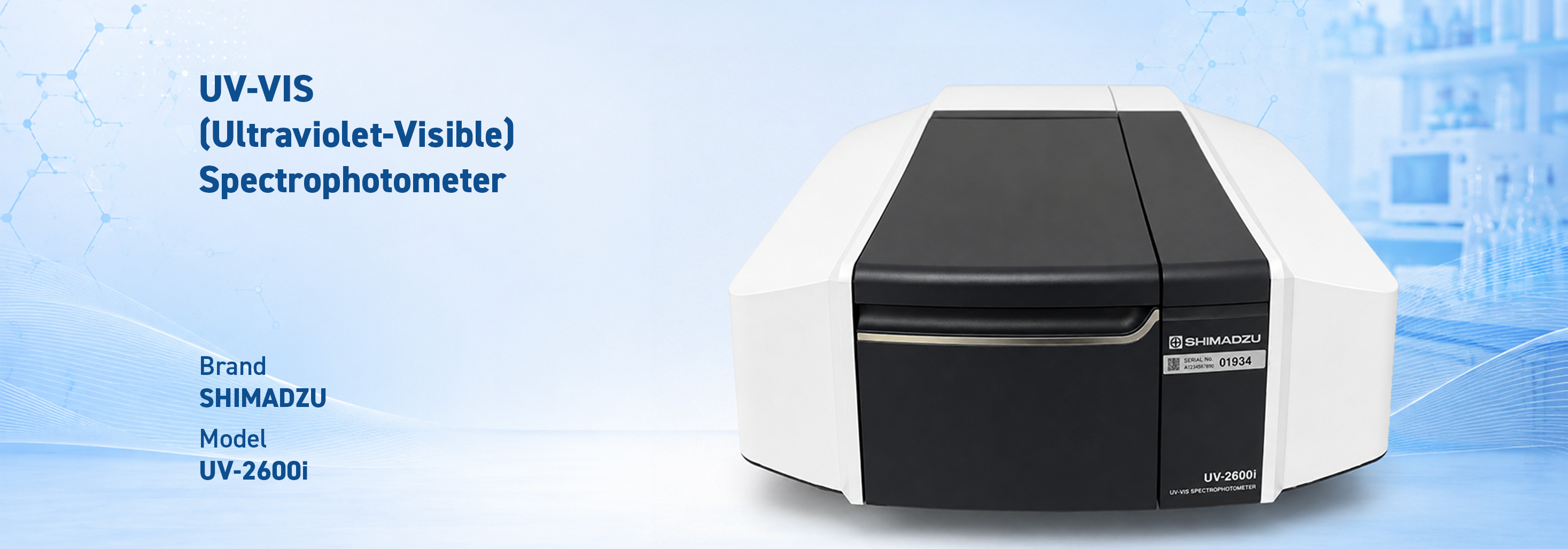
Device Name / Brand / Model
• Name: UV–Vis (Ultraviolet–Visible) Spectrophotometer
• Brand: Shimadzu
• Model: UV-2600i
Overview
A UV–Vis (Ultraviolet–Visible) spectrophotometer is a non-destructive, fast, and versatile analytical instrument that measures how much light a sample absorbs at specific wavelengths in the ultraviolet (200–400 nm) and visible (400–800 nm) regions. Based on absorbance data arising from light–matter interactions, this technique provides quantitative information about compounds present in the sample. Electrons within molecules absorb light and become excited; the resulting spectrum offers detailed insight into sample composition and concentration.
Purpose / Output
• Quantitative concentration determination via UV and visible absorbance measurements
• Spectral scanning for compound profiling and comparative analysis
• Purity and stability evaluation using appropriate methods
• Concentration/purity assessment for biomolecules (e.g., 260/280 ratio)
Application Areas
• Drug development and quality control: absorbance profiling of APIs and formulation components; purity and stability analyses
• Biotechnology and life sciences: concentration determination and purity assessment of DNA, RNA, and proteins (e.g., 260/280 ratio)
• Medical devices and biomaterials: verification of optical properties; evaluation of coating homogeneity and material permeability
• Environmental and food analyses: contaminant determination in water/air samples; additive and quality control analyses in food products
Highlights
• Wide wavelength range of 185–900 nm covering both UV and visible regions
• Dual light sources (deuterium for UV and halogen for VIS) supporting stable spectral performance
• Silicon photodiode detector for UV and VIS regions enabling reliable measurements
Technical Specifications
| Feature | Value / Description |
|---|---|
| Detector | Silicon photodiode for UV and VIS regions |
| Wavelength range | 185–900 nm |
| Light source | Deuterium lamp (UV) and halogen lamp (VIS) |
Contact / Service Request
For service requests: you may email [email protected]. (Please specify the sample type, purpose, and preferred date range.)